Understanding Industrial Centrifugal Fans and Their Key Functions


You use an Industrial Centrifugal Fan to make your workspace safe and comfortable. This fan has a spinning impeller that pushes air through ducts. It creates strong airflow for many industrial jobs. The table below explains how these fans help with HVAC systems, dust collection, cooling, material handling, and fume extraction.
Function | Description |
|---|---|
HVAC Systems | Make airflow better for temperature control and save energy. |
Dust Collection | Take away dust for cleaner air and to follow rules. |
Cooling | Stop machines and electronics from getting too hot. |
Material Handling | Move materials in ductwork systems. |
Fume Extraction | Get rid of dangerous fumes to keep workers safe. |
You get the best results with safety guards, careful checks, and inspections after setup. Troubleshooting helps keep static pressure and makes sure the fan works well.
Key Takeaways
Industrial centrifugal fans help make air cleaner and safer at work. They give strong airflow for many uses. Picking the right fan size and type can save energy. This can also lower costs. You might save up to 30% on energy bills. Doing regular maintenance is important. Check and clean the fans every three months. This helps fans work well and last longer. There are different impeller designs. Some are forward-curved and some are backward-curved. These designs meet special needs. They balance airflow and pressure well. Installing and setting up fans the right way is very important. This helps fans work their best. It also stops problems and keeps people safe.
Industrial Centrifugal Fan Basics
What Is an Industrial Centrifugal Fan
Industrial centrifugal fans move air in big buildings like factories and warehouses. These fans help control the air and keep it at the right temperature. You often see them in HVAC systems, dust collectors, and cooling setups. Centrifugal fans are special because they push air out from the middle. This makes strong airflow and high pressure.
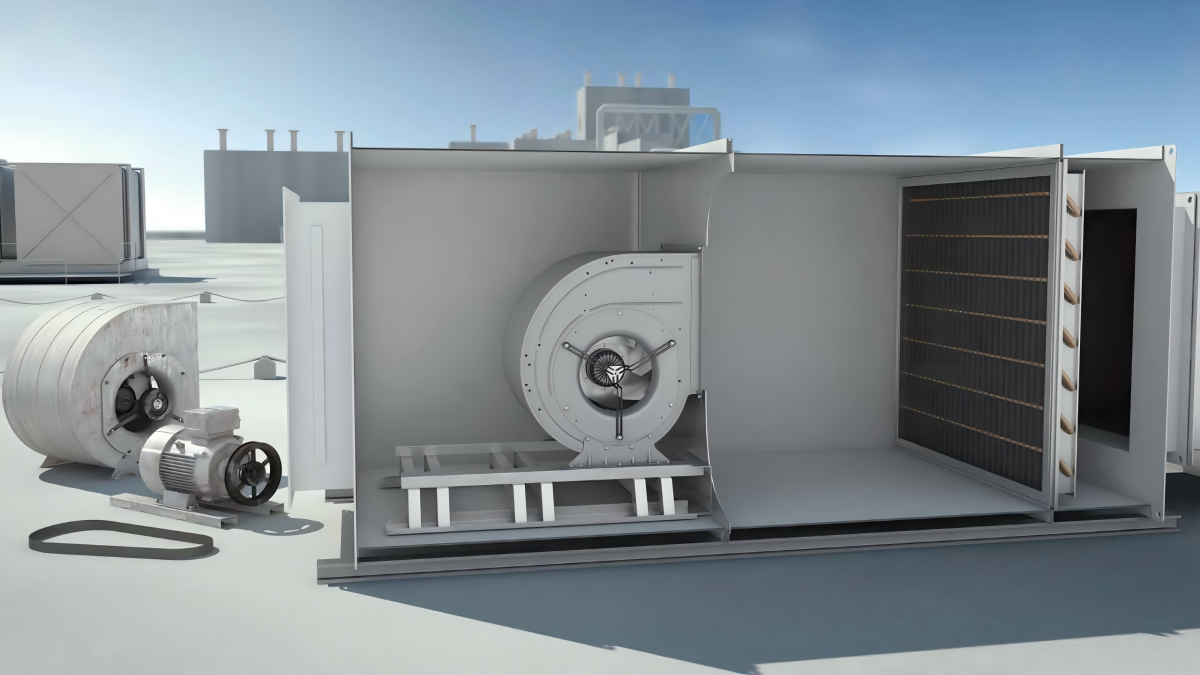
Here are the main parts of these fans:
Inlet cone
Fan housing
Impeller
Inspection door
Cooling wheel
Motor pedestal
Carter for transmission
Belts and pulleys
Unitary base
Housing
Drive
Ducts
Dampers
Louvers
Each part helps the fan work well and keeps people safe. The impeller spins fast and pushes air through the fan housing. The drive and motor pedestal help the impeller spin at the right speed. You need to install the fan the right way so all the parts work together. Good electrical connections help the fan run safely.
Longwell centrifugal fans come in many sizes and materials. You can pick the best fan for your job, whether you need to move a lot of air or make high pressure. Many people say Longwell fans help keep their factories clean and safe. A worker at a food plant said, "Longwell fans made our air cleaner and our workers feel safer."
How Centrifugal Fans Work
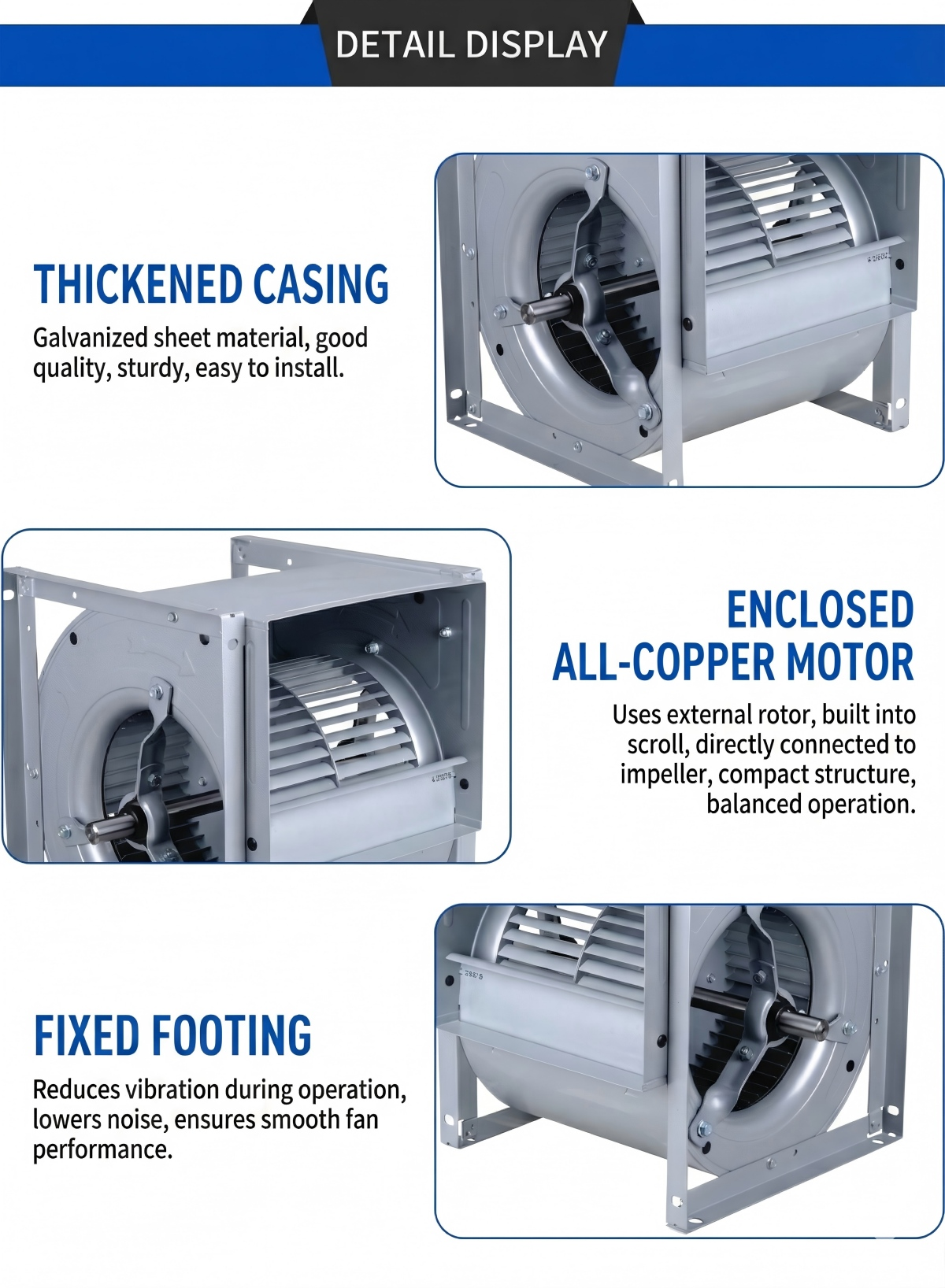
Centrifugal fans are used when you need to move air with high pressure. These fans work by spinning an impeller very fast. Air goes into the fan through the inlet and moves to the center of the impeller. The impeller blades push the air out using centrifugal force. This makes the air move faster and builds up pressure.
The table below shows how centrifugal fans and axial fans are different:
Fan Type | Airflow Direction | Pressure Generation |
|---|---|---|
Axial Fans | Linear, parallel | Low pressure, high flow rate |
Centrifugal Fans | Radial, changes direction | High pressure, lower flow rate |
Centrifugal fans blow air out at a 90-degree angle from where it comes in. This helps give a steady stream of high-pressure air. You use these fans in places that need strong airflow, like clean rooms or data centers. Installing the fan the right way helps it work its best and keeps people safe.
Centrifugal fans work in a simple way. The impeller spins and gives energy to the air. The air moves out and gets faster. The fan housing collects the fast air and turns it into pressure. Good electrical connections help the motor run well. If you make the fan spin faster, it uses a lot more power. For example, if you speed up the fan by 20%, it needs 73% more power. You can use variable speed drives to control the airflow and save energy.
Longwell centrifugal fans have special impeller designs for strong airflow and good performance. Many electronics factories use these fans to keep machines cool and safe. One manager said, "Longwell fans are easy to install and keep our equipment running without problems."
Tip: Always check the fan type and make sure you install it the right way. This helps stop problems and keeps everyone safe.
Centrifugal Fan Impellers and Types
Forward-Curved Impellers
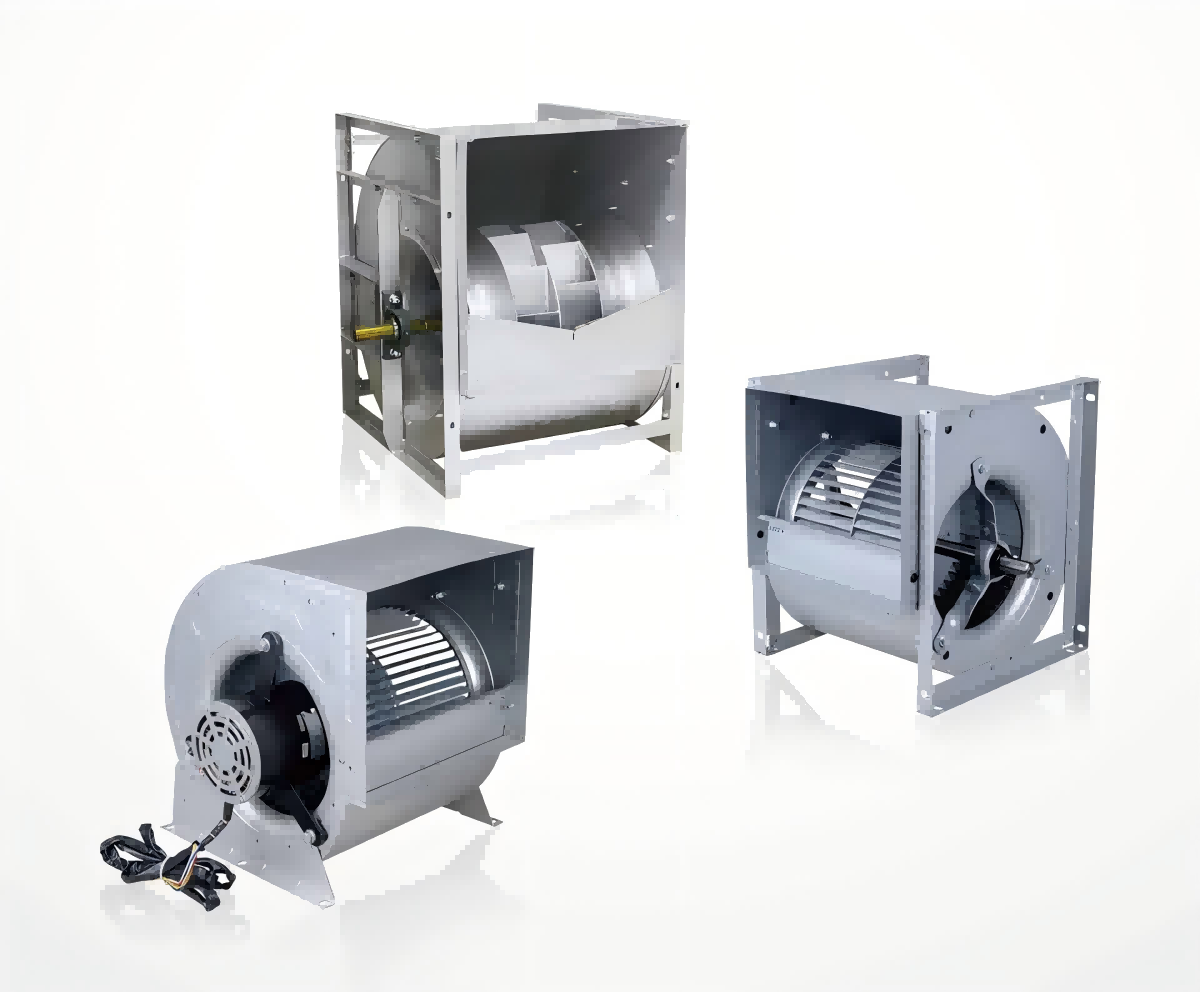
Forward-curved impellers are used where you need lots of air but not much pressure. These impellers are good for HVAC, hospital air, and big drying or cooling jobs. The blades bend the same way the impeller spins. This helps move air quietly and smoothly. These fans do not make much noise. That is why they are great for hospitals and cooling electronics.
Moves lots of air with low pressure
Runs quietly
Good for HVAC, hospitals, and dust control
Longwell has forward-curved impellers from 280mm to 1600mm wide. You can pick the size that fits your needs. Many people say Longwell fans help keep their work areas clean and comfortable. A factory manager said, "Longwell fans made our air better and our team feels safer."
Backward-Curved Impellers
Backward-curved impellers save energy and work well in high-pressure places. The blades bend away from the spin. This helps control air and uses less power. You spend less on electricity and get steady pressure. These impellers are good for clean rooms, data centers, and places with lots of resistance.
Backward-curved impellers are made from strong materials like aluminum alloy and stainless steel. They can last over 100,000 hours. The design helps you control air and pressure without losing power. Longwell’s backward-curved impellers move air from 1,000 m³/h to 300,000 m³/h. You can match the fan to your needs.
Other Impeller Designs
You can pick from many impeller materials for your job. Longwell has stainless steel, fiberglass reinforced plastic, polypropylene FRP, galvanized iron, and aluminum alloy. Each material has its own strengths for how it works and how long it lasts.
Material | Best For | Advantages |
|---|---|---|
Stainless Steel | Food, pharma, chemical industries | Strong and resists rust |
FRP | Corrosive places | Light and resists rust |
PPFRP | Acidic, chemical exhausts | Resists chemicals |
Galvanized Iron | General air systems | Cheap and good for mild places |
Aluminum Alloy (6061-T6) | Light designs | Lighter and strong |
Longwell’s air-foil blade impellers use special shapes for smooth air and top energy savings. You can get up to 89% efficiency in clean air jobs. These impellers work best in medium or high-pressure jobs with little dust. The smooth blades lower resistance and save energy. This can cut your power bill by up to 40%.
Tip: Pick the right impeller type and material for your needs. You will get better results, longer life, and lower bills.
Many Longwell customers use air-foil fans in labs and clean rooms. A lab boss said, "Longwell’s air-foil fans keep our space quiet and work well. We trust them every day."
Impeller Diameter Range |
|---|
280mm to 1600mm |
Longwell centrifugal fans give you steady work and save energy. The right impeller design helps you control air, pressure, and outlet for any job.
Centrifugal Fan Features
Efficiency and Performance
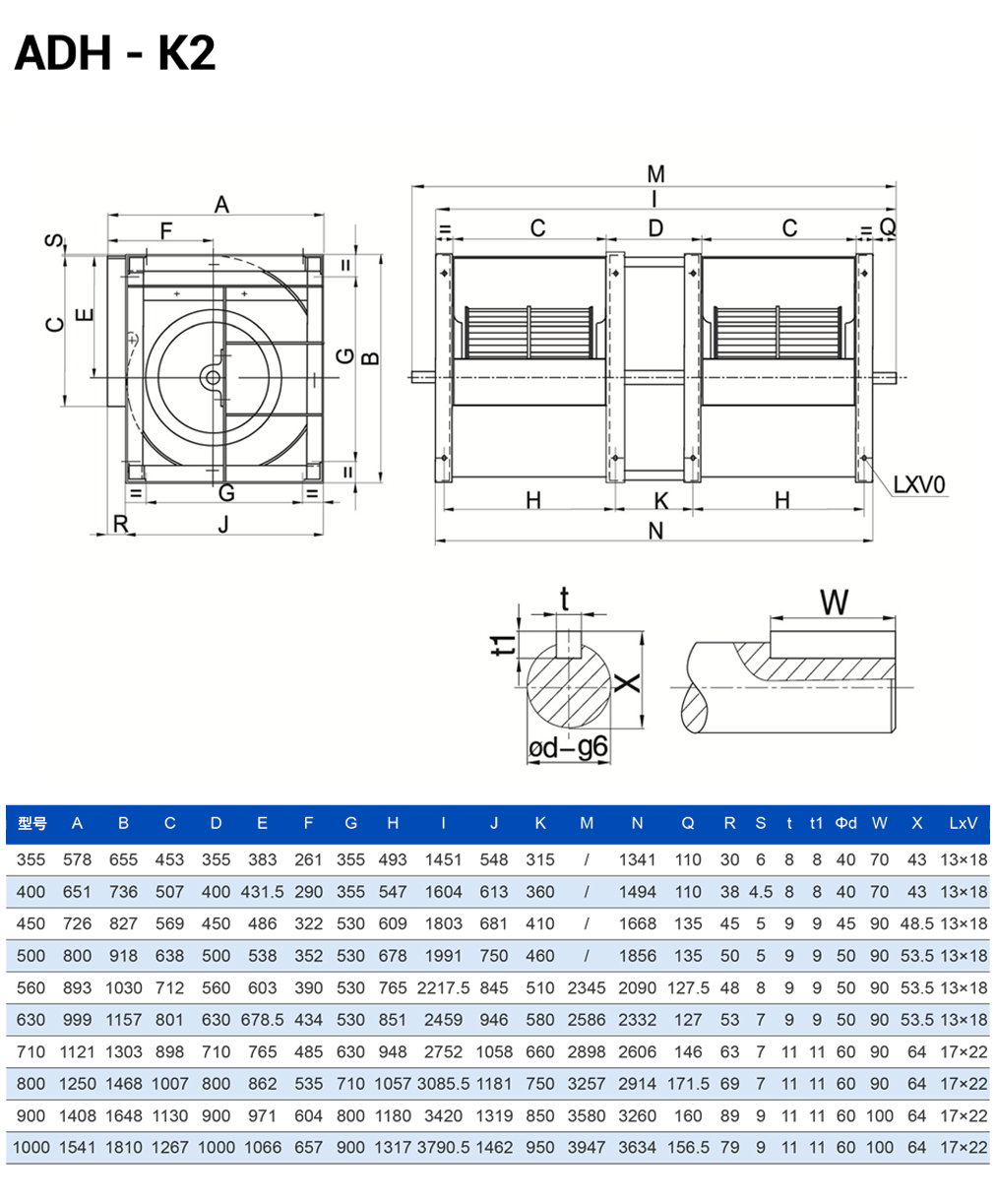
You want your industrial fan to move a lot of air but not waste energy. Longwell centrifugal fans help you do this. These fans use special impeller designs and air-foil blades. They push air through ducts in a smart way. You will notice better results if you pick the right fan size. When you slow down your fan by 10%, the airflow also drops by 10%. Static pressure drops even more, by 19%. Power use goes down the most, by 27%. This means you can change your fan speed to fit your needs and save money on energy.
Airflow changes when you change the fan speed.
Static pressure drops faster than airflow as speed goes down.
Power use drops the most when speed is lower.
Longwell fans can move different amounts of air. You can pick a model that moves from 1,000 m³/h up to 300,000 m³/h. The inlet design and right size help you get the airflow you need. These fans work well in HVAC systems, clean rooms, and factories. A data center manager said, "Longwell fans keep our machines cool and our bills low. It was easy to set up and the air keeps moving."
Fan Model | Airflow Rate (CFM) | Static Pressure (inH2O) |
|---|---|---|
CFM-6025V-131-167 | 16 | 0.1 |
Larger/Faster Fans | Greater Max Airflow | Greater Max Pressure |
Tip: Always check the inlet and ducts when you install your fan. This helps you get the best airflow and pressure.
Pressure and Noise Levels
Many jobs need high pressure. Centrifugal fans give strong airflow and keep the pressure steady. These fans work better than axial fans for long ducts or filters. The radial airflow makes them great for air conditioning and ventilation.
Fan Type | Pressure Output | Airflow Characteristics | Applications |
|---|---|---|---|
Centrifugal | High | Radial airflow | Air conditioning, industrial ventilation |
Axial | Low | Linear airflow | Moving large volumes of air |
Noise is important at work. Longwell centrifugal fans are usually between 70 dB and 80 dB. Some fans can be as loud as 120 dB, but Longwell fans are quieter. The noise comes from the blades and the motor speed. You can make fans quieter by installing them the right way and picking the right size.
Centrifugal fans usually make 75 dBA to 100 dBA.
Longwell fans are quieter, so they are good for labs and data centers.
A hospital customer said, "Longwell fans made our air cleaner and quieter. The way we set them up helped keep noise low for patients."
Durability and Maintenance
You want your fan to last a long time and not need much care. Longwell centrifugal fans use strong materials like stainless steel, aluminum, and FRP composites. These materials fight rust, chemicals, and heat. You can pick the best material for your fan based on what you need.
Material | Characteristics | Best Applications |
|---|---|---|
Mild Steel | Strong, cost-effective, suitable for standard air-handling tasks. | HVAC systems, general ventilation, non-corrosive environments. |
Stainless Steel | Excellent resistance to moisture, chemicals, and high temperatures. | Food processing, pharmaceuticals, chemical plants, marine applications. |
Aluminium | Lightweight, corrosion-resistant, suitable for portable fan units. | Lightweight construction fans, blowers, HVAC applications. |
FRP & Composites | Highly resistant to aggressive chemicals, lightweight, non-conductive. | Chemical plants, wastewater treatment, corrosive fume extraction. |
Specialised Coatings & Linings | Extends fan life, provides resistance against abrasion, moisture, or corrosives. | Dusty environments, spray booths, industrial drying systems. |
You should check your fan often to keep it working well. Oil, clean, and look at your fan every three months. If your place is dusty or busy, check your fan every month. Longwell fans need less care because they are built strong and designed well. This means you spend less time fixing your fan and more time working.
Oil and check your fan every three months.
Clean and check your fan every month if it is dusty or busy.
Follow the maker’s advice for how often to do maintenance.
A food plant boss said, "We picked Longwell fans because they last. Our fan has worked for years with little care. The airflow stays strong and the inlet stays clean."
Note: Good setup and the right size help your fan last longer and work better. Always check the inlet and ducts when you install your fan.
Industrial Centrifugal Fan Applications
Common Industrial Uses
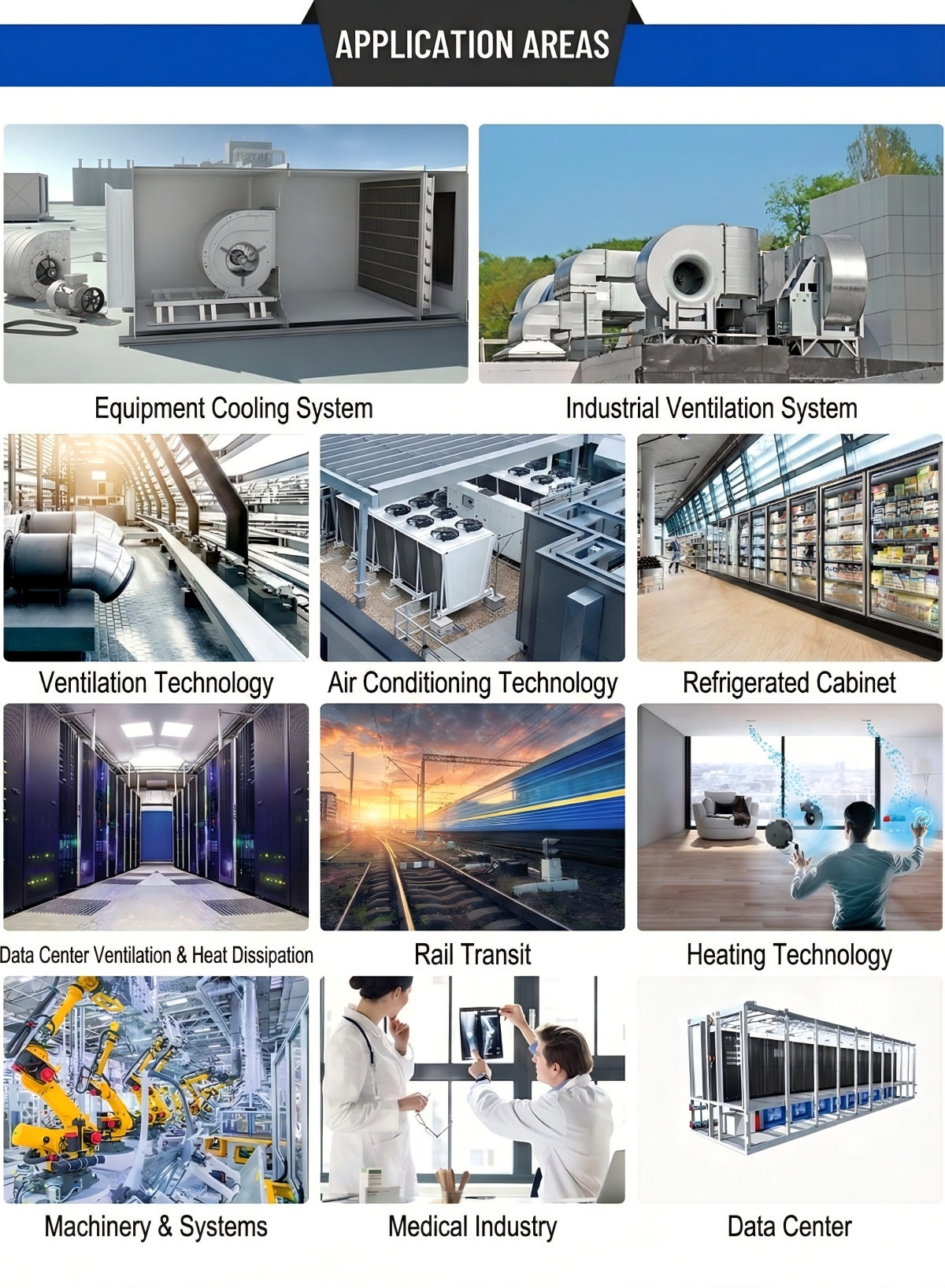
Industrial centrifugal fan units are used in many places. These fans help control air quality and temperature. They also help keep workers safe. You find them where strong airflow and high pressure are important.
HVAC industry
Industrial processes
Air pollution control systems
Steel plants
Chemical industry
Paper and pulp industry
Textile industry
Food industry
Glass industry
Exhaust ventilation
Dust collection systems
Longwell industrial centrifugal fan models work well in clean rooms and data centers. They also work in process industries. You can use them to move air through filters. This helps keep your workspace safe. In a food factory, a manager said, "Longwell fans keep our air fresh and help us meet safety rules every day." In a data center, you need steady airflow and low noise. A technician shared, "Longwell fans run quietly and keep our servers cool without raising energy consumption."
These fans push air through filters and control airflow. You save money because Longwell fans use less energy. You also get reliable performance. You can pick the fan that fits your needs.
Installation Methods
You need to follow the right steps to install a centrifugal fan. Good installation helps your fan work well and last longer. Make a checklist and gather all the parts before you start.
Pick a spot that is easy to reach for maintenance.
Attach the fan housing tightly to a strong base.
Put in the impeller and drive system with care. Make sure everything is balanced.
Connect the ductwork to the fan housing. Seal all joints so air does not leak.
Wire the electrical parts and test the fan before you use it.
Tip: Always check the space where you will install the fan. Make sure it is flat and does not shake.
Safety is important when you install centrifugal fan units. You must follow safety rules and use the right tools. The table below shows important safety steps for installation:
Safety Consideration | Description |
|---|---|
Accurate and secure installation | Follow current safety standards for every step. |
Advanced tools and techniques | Use reliable tools for a strong setup. |
Component verification | Check all parts to get the best performance. |
Site conditions | Make sure the area is level and easy to reach. |
Foundation and support | The base must hold the fan’s weight and movement. |
Electrical supply and controls | Match voltage and safety devices to the fan’s needs. |
Duct connections | Align and seal ducts to stop turbulence. |
Isolation and damping systems | Use anti-vibration mounts to lower noise and vibration. |
A Longwell customer in a textile plant said, "We followed the installation guide and our fan runs smoothly. Maintenance is easy and downtime is low." You get better results when you install centrifugal fan units with care.
Terminology Explained
You need to know some important words when you work with industrial centrifugal fan systems. These words help you understand how your fan works and how to get the best results.
Term | Description |
|---|---|
Fan curve | Shows how the fan performs at different airflow and pressure settings. |
System curve | Tells you the resistance and pressure in your duct system at a set airflow. |
Operating point | The spot where the fan curve and system curve meet. This is your working level. |
Pump area (“Stall”) | The part of the curve where the fan does not run smoothly. Avoid this area. |
Axis effect | The energy needed to reach the operating point. |
Peripheral speed | How fast a point on the blade moves. This sets the top speed for your fan. |
Note: If you do not understand these words, ask your supplier for help. Longwell experts can help you pick and install your fan.
Industrial centrifugal fan units help you control air and use less energy. They also keep your workspace safe. You get strong performance and easy maintenance when you choose the right fan and install it the right way.
Industrial centrifugal fans help make the air cleaner. They also keep your workspace safe for everyone. These fans give strong airflow and save energy. They work well and do not break down often. Longwell Centrifugal Fans are used in many places. You can find them in data centers and food plants. People who use these fans say they are quiet. They also say the fans do not need much fixing.
Advantage | Description |
|---|---|
Energy Efficiency | You can save up to 30% on energy bills. |
Low Maintenance | You spend less time and money fixing them. |
High-Pressure Performance | They handle hard jobs with steady airflow. |
Improved Air Quality | You breathe cleaner air and stay healthier. |
Safety Features | They help stop dust explosions from happening. |
You might wonder how these fans work. You may want to know about the different types. You could also ask how to pick the right size and install them. If you need help, Longwell can give you advice. They will help you find the best fan for your needs.
FAQ
How do you choose the right centrifugal fan size?
You look at your airflow needs and the pressure required for your space. Longwell offers fans from 280mm to 1600mm. A food factory manager said, "Longwell helped us pick the perfect size for our dust control system."
What maintenance do Longwell centrifugal fans need?
You check the fan every three months. Clean the blades and oil moving parts. Longwell fans need less maintenance because they use strong materials. You spend less time fixing them and more time working.
Can you use Longwell fans in clean rooms?
Yes, you can use Longwell fans in clean rooms. Their advanced air-foil blades keep airflow steady and noise low. A lab supervisor shared, "Longwell fans keep our workspace quiet and safe for sensitive equipment."
What materials do Longwell fans use?
You can choose from stainless steel, aluminum, FRP, and galvanized iron. Each material works best for different jobs. Stainless steel resists rust. FRP handles chemicals. Aluminum is light. You pick what fits your needs.
How do Longwell fans help save energy?
Longwell fans use efficient impeller designs. You control the speed to match your needs. This saves up to 30% on energy bills. A data center technician said, "Longwell fans lowered our power costs and kept our servers cool."
See Also
The Importance of Centrifugal Fans in HVAC and Industry
Understanding Performance Features of Centrifugal Fans
Key Factors to Consider When Choosing Fan Manufacturers
